
Introduction
Commercial buildings depend on multiple systems and facilities to operate efficiently every day. Air conditioning, electrical installations, plumbing, elevators, generators, lighting, fire safety systems, and other building services all require regular inspection and maintenance.
When these systems are neglected, even a small technical issue can develop into a major problem. Equipment failures can affect tenants, employees, visitors, customers, and the overall operation of a commercial property.
An Annual Maintenance Contract (AMC) provides property owners and facility managers with a structured approach to managing these maintenance requirements. Instead of arranging repairs only when something goes wrong, an AMC allows businesses to plan routine maintenance and receive ongoing technical support.
What Is an Annual Maintenance Contract for Commercial Buildings?
An annual maintenance contract for a commercial building is a service agreement between the property owner or facility manager and a professional maintenance provider.
The agreement defines the building systems covered and the services that will be provided during the contract period, which is generally one year.
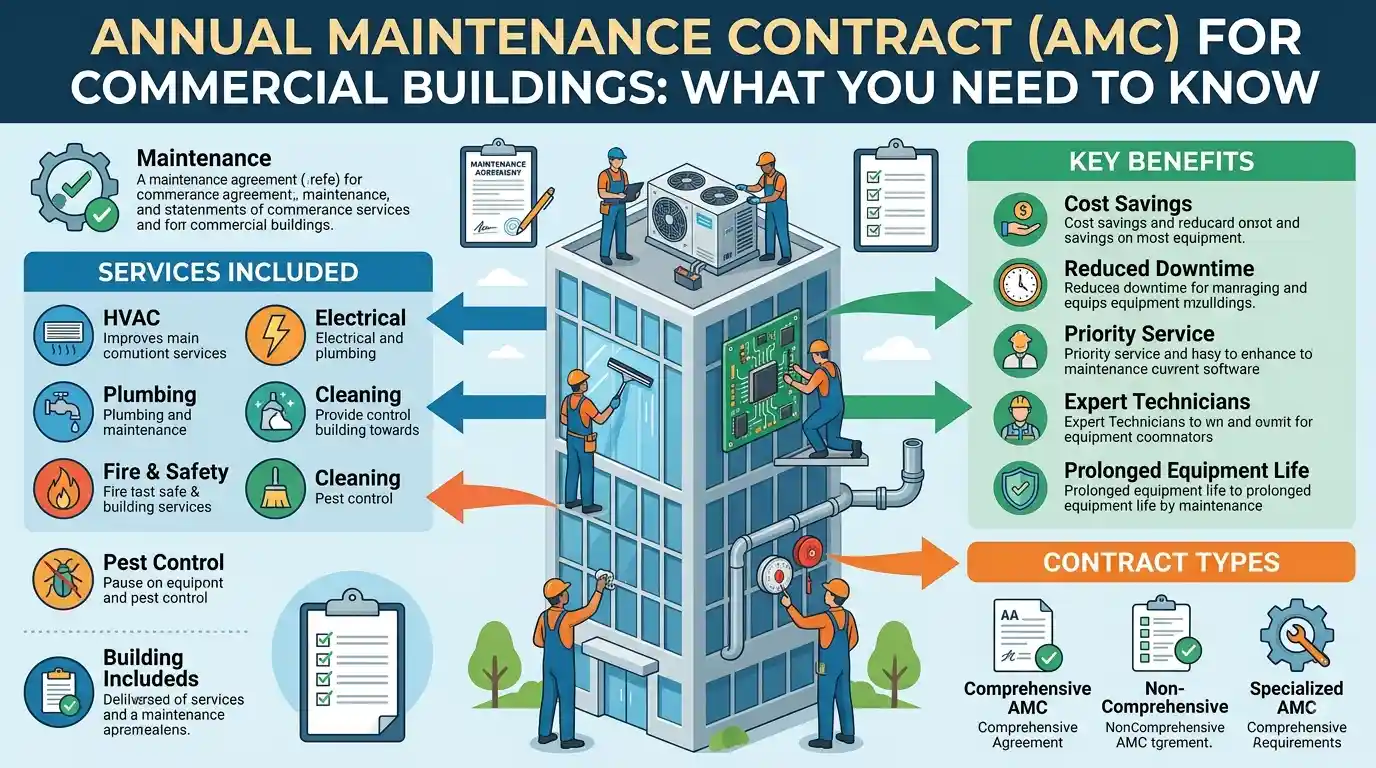
Depending on the building’s requirements, an AMC can cover air conditioning, electrical systems, plumbing, generators, pumps, lighting, fire safety equipment, and other technical facilities.

The exact scope depends on the provider and the terms of the contract.
Why Commercial Buildings Need Regular Maintenance
Commercial buildings contain numerous systems that operate continuously.
Air conditioning systems may run for long hours, electrical equipment is regularly used, plumbing systems experience constant demand, and other building facilities can experience normal wear and tear.
Without scheduled maintenance, these systems can gradually lose performance or develop faults.
Regular maintenance allows property managers to identify potential problems before they cause significant disruption.
HVAC Maintenance
Heating, ventilation, and air conditioning systems are important for maintaining comfortable indoor environments.
Commercial HVAC equipment requires regular cleaning, inspection, filter maintenance, performance checks, and other servicing.
Poorly maintained systems may experience reduced performance, unusual noise, airflow problems, or unexpected breakdowns.
An AMC can provide a planned schedule for HVAC inspections and maintenance, helping businesses maintain more consistent system performance.
Electrical System Maintenance
Electrical systems are another important area of commercial building maintenance.
Electrical panels, wiring, switches, lighting systems, and other components require appropriate inspection and servicing.
Regular maintenance can help identify loose connections, damaged components, overheating, or other potential issues.
Professional electrical maintenance is particularly important because electrical problems can affect both operations and safety.
Plumbing Maintenance
Commercial plumbing systems require regular attention to prevent leaks, blockages, water pressure issues, and other problems.
A small plumbing issue can sometimes cause significant damage if it remains unnoticed.
Routine inspections can help identify leaks and other developing problems before they create larger disruptions.
An AMC can include scheduled plumbing inspections and maintenance depending on the agreement.
Generator and Backup Power Maintenance
Many commercial properties rely on generators or backup power systems to maintain essential operations during power interruptions.
Regular generator maintenance can include inspection, testing, cleaning, fluid checks, battery inspection, and other procedures depending on the equipment.
An AMC can help ensure that backup power systems receive attention before they are needed during an emergency.
Fire Safety System Maintenance
Fire safety systems require proper inspection and maintenance to remain ready for use.
Depending on the building and applicable requirements, maintenance may involve alarms, detection systems, emergency lighting, extinguishing equipment, and other fire protection components.
Businesses should ensure that their maintenance provider understands the requirements applicable to the building and systems being maintained.
Elevator and Vertical Transportation Systems
Buildings with elevators or other vertical transportation equipment require specialized maintenance.
Regular inspections and servicing can help identify mechanical or electrical issues and support reliable operation.
Because elevator systems are specialized, commercial property owners should ensure that the selected maintenance provider has the appropriate technical expertise and authorization where required.
Benefits of an AMC for Commercial Buildings
A structured maintenance contract can provide several practical benefits for commercial property owners and facility managers.
Regular servicing can reduce the risk of unexpected equipment failures and help maintain building systems in better operating condition.
An AMC can also make maintenance expenses more predictable and simplify the process of scheduling technical services.
Reduce Unexpected Breakdowns
Unexpected building system failures can create significant inconvenience.
A malfunctioning HVAC system can affect indoor comfort, while electrical or plumbing problems can interfere with normal activities.
Regular preventive maintenance helps identify potential problems before they develop into major failures.
Improve Building System Performance
Maintenance can help building systems operate more consistently.
Cleaning, testing, adjustments, and component inspections can address factors that negatively affect performance.
This can be particularly valuable in large buildings where multiple systems must operate together.
Reduce Maintenance Costs
Emergency repairs can sometimes be more expensive than planned maintenance.
An AMC encourages regular servicing, which can help identify minor issues before they require major repairs.
The contract can also provide predictable pricing for included maintenance services.
Businesses should still review exclusions and additional charges to understand the complete cost structure.
Improve Tenant and Occupant Comfort
Commercial buildings are often used by employees, customers, tenants, and visitors.
Reliable building systems contribute to a comfortable and functional environment.
Regular maintenance of air conditioning, lighting, plumbing, elevators, and other facilities can help reduce disruptions that affect occupants.
Support Safety
Building maintenance also has an important relationship with safety.
Electrical faults, damaged equipment, plumbing leaks, malfunctioning fire safety systems, and other issues can create potential risks.
Regular professional inspections can help identify and address maintenance-related safety concerns.
Simplify Facility Management
Managing multiple maintenance requirements can be challenging for property managers.
An AMC provides an established maintenance provider and predefined service schedule.
This can reduce the time spent searching for technicians and arranging individual service visits.
A professional provider can also maintain service records and provide reports after inspections.
Choosing the Right Commercial Building AMC Provider
The right provider should have relevant experience in commercial building maintenance.
Businesses should evaluate the company’s technical expertise, technician qualifications, service availability, emergency response, reputation, and experience with similar properties.
The provider should also have the capacity to handle the size and complexity of the building.
Review the Contract Scope
Before signing an AMC, property owners should carefully review the systems and services covered.
The contract should identify the equipment included, maintenance frequency, response times, emergency support, reporting procedures, exclusions, and additional charges.
Any important service requirement should be clearly documented.
Maintenance Reports and Documentation
Maintenance reports help facility managers track building system performance.
Reports can include information about inspections, faults, completed repairs, equipment condition, and recommendations.
Keeping these records organized can help managers identify recurring issues and plan future maintenance work.
Final Thoughts
Commercial buildings depend on reliable systems and facilities to operate effectively. An Annual Maintenance Contract provides property owners and facility managers with a structured approach to maintaining HVAC systems, electrical installations, plumbing, generators, fire safety equipment, and other essential facilities.
Regular preventive maintenance can reduce unexpected breakdowns, improve system performance, support safety, and make maintenance management more predictable.
The best results come from selecting a qualified and experienced provider whose contract clearly matches the building’s requirements.
With an effective annual maintenance contract, commercial property owners can take a proactive approach to facility maintenance and support a more reliable environment for employees, tenants, customers, and visitors.
Related Reading: Dishwasher Maintenance Needed — full guide
Related Reading: الإمارات العربية المتحدة تسجّل أعلى نسبة في العالم من امتلاك العملات الرقمية — وإليك أين تذهب هذه الأموال — full guide
Related Reading: How Construction ERP Systems Improve Project Visibility and Control — full guide
Related Reading: Commercial Painters in South Florida
Related Reading: Deck & Fence Staining in London, ON
Related Reading: اكتشف تجربة الصوت المفتوحة مع سماعات Huawei Free Clip 2 الجديدة — full guide
Related Reading: Diving in Marsa Alam: The Ultimate Guide to Egypt's Best Kept Underwater Secret — full guide
Related Reading: LEED Consultancy firms in UAE