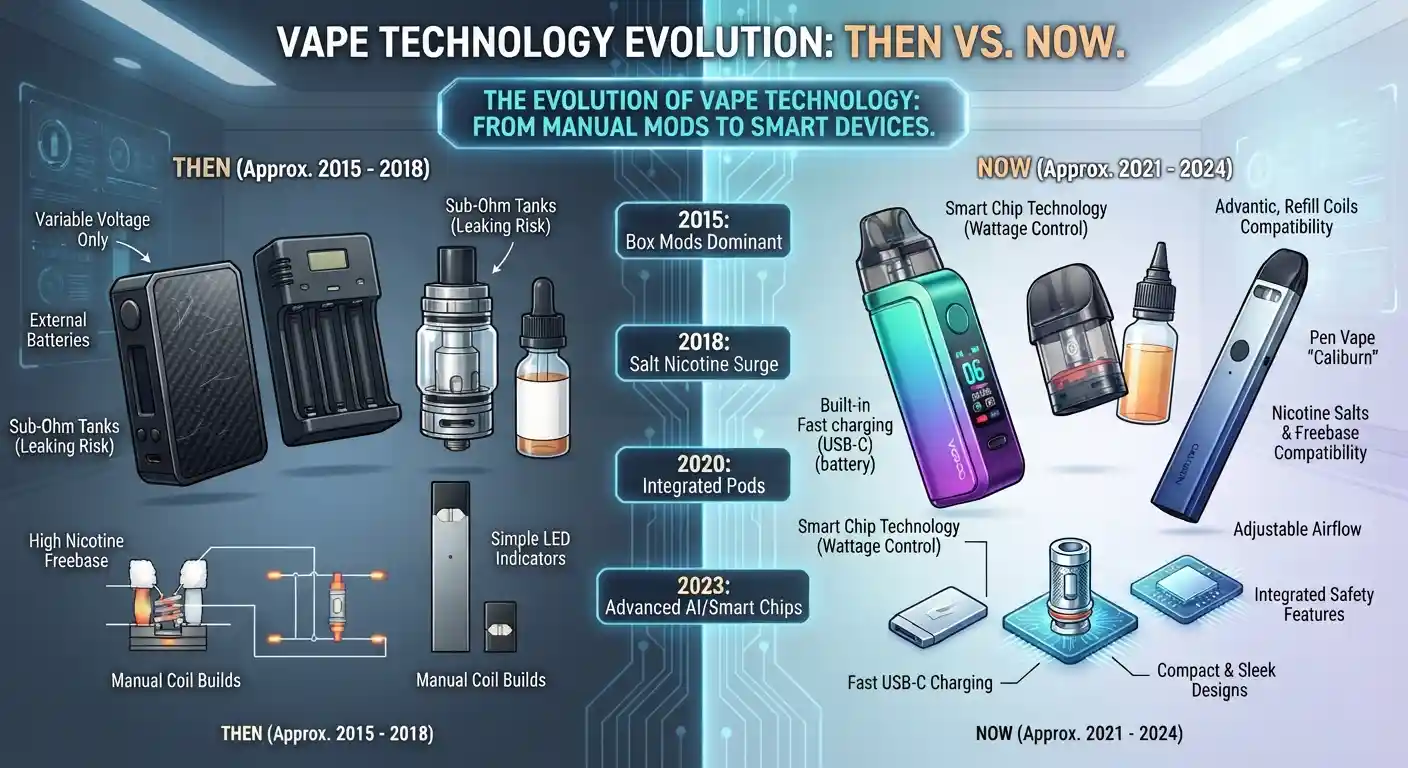

Vaping technology has changed significantly since electronic cigarettes first appeared on the market. Early products were relatively simple, while modern devices can include compact batteries, specialized pods, automatic sensors, sophisticated heating systems, and a variety of consumable formats.
These developments have created a much broader market than the one associated with the first generation of electronic cigarettes. Today, adults researching vaping may encounter disposable devices, reusable pod systems, refillable equipment, and heated tobacco technology.
Understanding how these technologies developed helps explain why modern products can look very different while still being based on the basic concept of electronically controlled heating.
The Early Generation of Electronic Cigarettes
The earliest electronic cigarettes were generally designed to resemble conventional cigarettes.
They typically consisted of a small battery, a heating component, and a cartridge containing liquid. Their primary objective was to provide a compact electronic alternative to traditional cigarette designs.
These early products had relatively limited controls and battery capacity. Their simple construction helped introduce the concept of electronic nicotine delivery to a wider audience.

Over time, however, manufacturers began moving away from cigarette-shaped designs and experimenting with new formats.
The Shift Toward Compact Devices
One of the most noticeable developments has been the reduction in device size.
Advances in battery technology and electronic components allowed manufacturers to create smaller devices without removing all of their essential functions.
This helped lead to the development of compact pod systems. Instead of using larger tanks and complicated configurations, these devices could combine a small battery with a compact pod.
The result was a simpler form factor that became particularly common in modern vaping markets.
The Rise of Pod Systems
Pod technology changed the way many electronic cigarettes were designed.
A pod system generally separates the reusable battery device from the consumable pod. Depending on the design, the pod can either be replaced or refilled.
This approach provides a different balance between portability, maintenance, and long-term use.
Some systems use pre-filled pods, while others allow compatible e-liquid to be added manually. This variety has created multiple subcategories within the pod market.
E-Liquid Technology Has Also Developed
The development of vaping devices has been accompanied by changes in e-liquid formulations.
Modern e-liquids can contain different ratios of propylene glycol and vegetable glycerin, various flavoring combinations, and different nicotine concentrations.
Nicotine salts have also become an important part of the modern vaping market. These formulations are commonly associated with compact pod devices and are different from some of the earlier liquid formulations used in traditional vape equipment.
People researching Pod Salt Dubai, for example, may encounter information connected with pod-compatible nicotine liquids. Understanding the liquid formulation is important because not every e-liquid is intended for every type of device.
Battery Improvements
Battery technology has played a major role in the development of modern vaping products.
Earlier devices had relatively limited battery capacity and often required frequent replacement or charging. Modern rechargeable devices can use compact batteries with integrated charging systems and electronic controls.
Some products use USB-based charging, while others incorporate newer charging connections.
Despite these improvements, batteries remain an important safety consideration. Devices should be charged according to manufacturer instructions and protected from physical damage, excessive heat, and unsuitable charging conditions.
Automatic Activation Became Common
Another development has been the use of automatic draw activation.
Instead of pressing a physical button, some modern devices detect airflow when a user draws from the mouthpiece. An electronic sensor then activates the heating system.
This simplified the operation of many compact devices.
Other products continue to use physical buttons, and some advanced systems combine buttons with additional electronic controls.
The activation method is primarily a design feature and does not determine whether a product is safe or contains nicotine.
The Growth of Disposable Formats
Disposable vaping products represent another major development.
Instead of separating the reusable battery from a replaceable pod, disposable products generally integrate the battery, liquid reservoir, heating element, and electronic components into one unit.
This makes the product simpler from a maintenance perspective. However, it also means that the entire electronic device can eventually become waste.
Some newer disposable formats have rechargeable batteries, but their overall design can still remain limited-use rather than truly reusable.
Heated Tobacco Is a Separate Development
Not all modern electronic nicotine products are vaping devices.
Heated tobacco systems developed as a separate category. These products use electronic heating technology to warm specially designed tobacco consumables rather than conventional e-liquid.
The distinction is important because both systems may use batteries and heating elements while operating with completely different consumables.
This is one reason modern nicotine terminology can sometimes be confusing.
Understanding TEREA and Heated Tobacco
TEREA is associated with a heated tobacco consumable designed for compatible heating technology.
When people search for Terea Dubai, they are generally looking for information related to this heated tobacco category rather than conventional e-liquid vaping.
The fundamental difference lies in the material being heated. A conventional vape system works with e-liquid, whereas a heated tobacco system is designed around a tobacco-based consumable.
Although both technologies involve controlled heating, their internal engineering and consumables are not interchangeable.
More Sophisticated Electronic Controls
Modern devices can also include electronic features that were uncommon in earlier generations.
Depending on the product, these can include battery indicators, charging controls, sensors, power management systems, and adjustable settings.
Some larger devices may allow users to adjust aspects of the heating process, while simple pod and disposable systems may offer almost no manual controls.
The additional electronics can improve functionality, but they also make correct handling and maintenance more important.
Changes in Device Materials
Manufacturers have also experimented with different materials and construction techniques.
Lightweight metals, plastics, silicone components, and other materials can be combined to create compact housings and comfortable mouthpieces.
Improved manufacturing precision has also allowed smaller components to be integrated into increasingly compact devices.
However, the external material does not tell a consumer everything about the device. The battery, heating element, and consumable remain more important when identifying the technology.
Environmental Concerns Have Increased
As vaping technology has developed, environmental questions have become more noticeable.
Reusable systems can keep the main electronic device in service while only pods or other consumables are replaced. Disposable products can create more electronic waste because batteries and electronics are discarded along with the rest of the device.
Batteries and electronic components should be disposed of according to appropriate local guidance.
The environmental impact of vaping products is therefore another factor worth considering when comparing different device formats.
Health Considerations Have Not Disappeared
Technological development does not remove the health considerations associated with nicotine.
Many modern vaping and tobacco products contain nicotine, which is addictive. A smaller battery, improved sensor, or more advanced heating system does not change the fundamental nature of nicotine dependence.
Adults who do not currently use nicotine should not begin using nicotine products simply because the technology appears newer or more sophisticated.
Anyone already using nicotine should remain aware of the contents and concentration of the product.
Regulation Has Evolved Too
As the technology has developed, governments and regulators have also introduced rules concerning electronic nicotine products.
In the UAE, regulations can cover areas such as age restrictions, product sales, advertising, importing, packaging, and public use.
Rules may also differ according to product category and location.
Because regulations can change, adults researching vaping products in Dubai or elsewhere in the UAE should rely on current official guidance rather than outdated online information.
What the Future May Bring
The development of vaping technology is likely to continue as manufacturers explore smaller components, improved battery efficiency, different heating systems, and new product formats.
However, technological innovation will continue to raise the same fundamental questions: What does the product contain? How does it work? Is it reusable? How should it be disposed of? What regulations apply?
These questions remain relevant regardless of how advanced the device becomes.
Final Thoughts
Vape technology has moved from relatively simple cigarette-shaped electronic devices to a diverse market containing pod systems, disposable products, advanced reusable devices, and heated tobacco technology.
Battery improvements, smaller components, automatic sensors, new e-liquid formulations, and specialized heating systems have all contributed to this evolution.
For adults researching products in the UAE, understanding the difference between e-liquid vaping and heated tobacco is particularly important. Terms such as Terea Dubai and Pod Salt Dubai can point toward different product categories, making it useful to look beyond terminology and understand the technology behind each one.
Ultimately, informed research should consider device design, nicotine content, battery safety, environmental impact, and current UAE regulations alongside technological features.